
Extremely spherical vancomycin-loaded aerogels combining inkjet printing and superhydrophobic surfaces
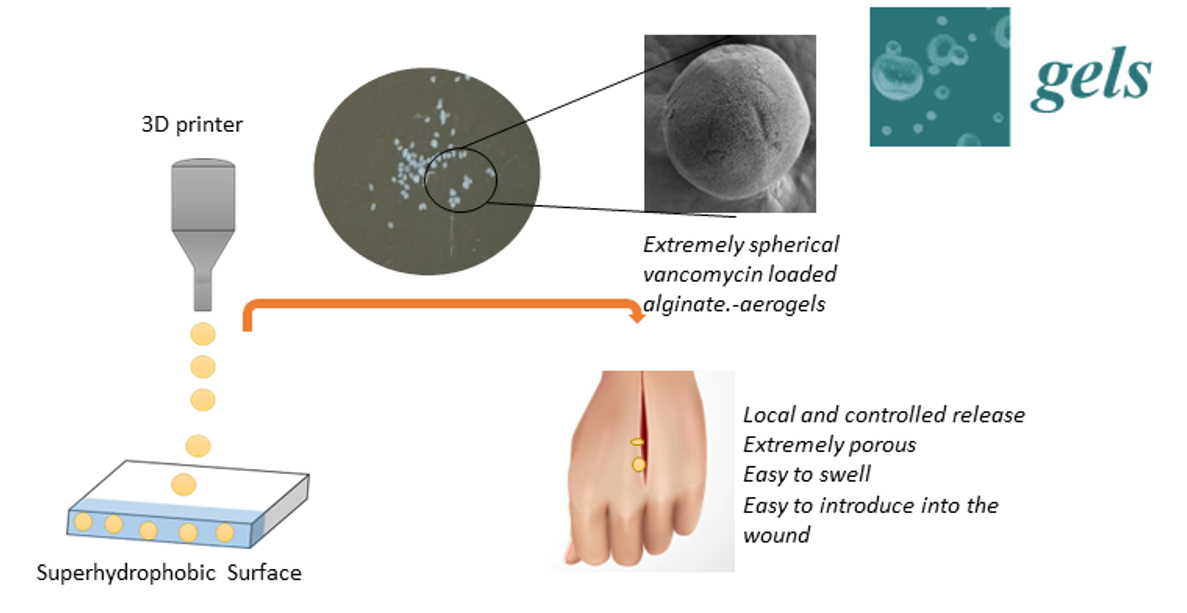
A new work has been published demonstrating the improvement of the sphericity of aerogels if both superhydrophobic surfaces and inkjet printing are used in combination for the first time. Also, an increment in the loading of vancomycin was achieved using a combination of loaded inkjet and drug-saturated gelation bath.
The technology could lead to the improvement of current treatments in chronic wounds. This pathology impairs the quality of life of over 40 million of patients globally. With a suitable, effective and space- and time-accurate treatment, chronic wounds can be prevented.
Ideal drug release in the wound healing process must be a controlled and local release with two phases: (i) a burst release with immediate therapeutic effect at the infected site and (ii) a sustained release for a prolonged period of time. Vancomycin-aerogels developed with the combination of both technologies, demonstrated a good release profile, covering the 2 main phases to treat infections. The quantity of vancomycin released was enough to treat the most common type of bacteria in these infections (S. aureus).
Aerogel particles, due to their micrometric size, are able to fit into chronic wounds with the capacity to adapt to the shape and an exceptional capacity to swell. The sphericity of the drug-loaded aerogels prepared led to an increase in the specific surface area and the mesoporosity, thus obtaining more efficient drug delivery systems. The release of the drug is limited to the presence of pus in the wound area, so, the non-desirable antimicrobial resistances could be avoided due to the specific moment to release the drug.
The work entitled “Preparation of Vancomycin-Loaded Aerogels Implementing Inkjet Printing and Superhydrophobic Surfaces” has been published in Gels (I.F.: 4.432) in July 2022.
Recent Comments